
Excavator Operator Jobs: How to Launch a Stable, In-Demand Career in 2025
Why Excavator Operators Are More Needed Than Ever
Demand for skilled excavator operators is surging, driven by four key trends:
- Infrastructure Overhauls: Governments worldwide are investing billions in roads, bridges, and utilities. In the U.S., the 2021 Infrastructure Act alone is creating tens of thousands of roles for heavy equipment operators.
- Booming Construction: Housing developments, warehouses, and commercial buildings can’t rise without excavators prepping the land. Residential and commercial projects now account for 60% of excavator operator jobs.
- Mining & Energy Growth: Extracting minerals, oil, and gas relies on excavators to clear terrain and dig access routes, fueling demand in states like Texas, Colorado, and Montana.
- Aging Workforce: As experienced operators retire, a skills gap has emerged. The U.S. Bureau of Labor Statistics predicts 5% growth in heavy equipment roles by 2030—faster than most jobs.
What Does an Excavator Operator Actually Do?
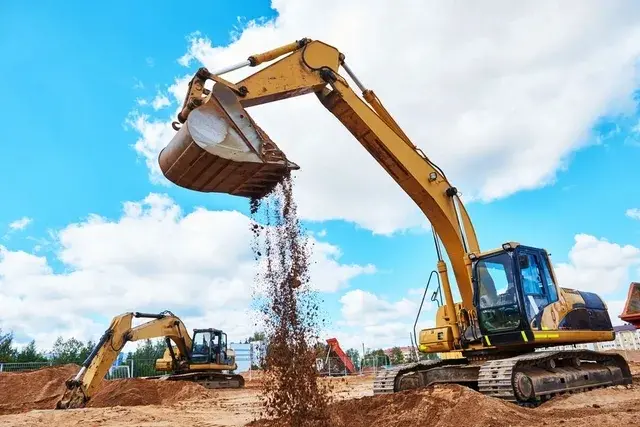
It’s more than just driving big machines. Excavator operators:
- Dig trenches for pipelines, foundations, and drainage systems with precision.
- Move soil, rocks, and debris to clear job sites or shape land for construction.
- Use attachments (like hydraulic hammers) to demolish small structures.
- Grade land to level surfaces, ensuring buildings or roads sit evenly.
- Collaborate with foremen and engineers to follow blueprints and safety plans.
- Inspect equipment daily—checking hydraulics, tires, and controls—to prevent breakdowns.
- Safety is non-negotiable: Operators follow OSHA rules, wear protective gear (hard hats, steel-toe boots), and avoid hazards like unstable ground or overhead power lines.
Skills That Make You Stand Out
You don’t need years of experience to start, but these skills will get you hired faster:
- Technical Know-How: Ability to operate excavators (10–45 tons) and use attachments (buckets, grapples). Familiarity with brands like Caterpillar or Komatsu is a bonus.
- Safety Focus: OSHA 10 or 30-hour certification (required by most employers) and basic knowledge of equipment maintenance.
- Physical Stamina: You’ll sit for hours, climb in/out of cabs, and work in all weather—heat, rain, or cold.
- Spatial Smarts: Reading blueprints, judging distances, and maneuvering in tight spaces without damaging property.
- Teamwork: Communicating with crews to coordinate tasks—no project succeeds in silos.
- Most employers prefer a high school diploma or GED. Some roles require a commercial driver’s license (CDL) to transport equipment between sites.
How to Train for the Job
No experience? These paths will get you ready:
- Vocational Programs: Community colleges and trade schools (e.g., Universal Technical Institute) offer 6–12 week courses. Learn safety, machinery mechanics, and hands-on operation. Tuition: $2,000–$8,000, with financial aid often available.
- Apprenticeships: Unions (like Operating Engineers Local 150) and construction firms offer 2–4 year programs. You’ll earn while learning—starting at $15–$25/hour—with classroom time and on-the-job training.
- Certifications: Credentials like the NCCCO (National Commission for the Certification of Crane Operators) Excavator Certification boost pay and credibility. Some states require licensure for public projects.
How to Find Your First (or Next) Excavator Job
Jobs are everywhere—you just need to know where to look:
- Job Boards: Search “excavator operator jobs” on Indeed, ZipRecruiter, or Glassdoor. Filter by location (e.g., “Arizona excavator jobs”) or experience level.
- Construction Companies: Check websites of local contractors or national firms like Caterpillar—many list openings under “Careers.”
- Trade Groups: Join the Associated General Contractors (AGC) or International Union of Operating Engineers (IUOE) for exclusive job boards and networking events.
- Staffing Agencies: Firms like PeopleReady specialize in construction roles, placing temp or permanent operators on projects.
Tips to Land the Role
- Highlight Related Skills: Even if new, mention forklift experience or familiarity with heavy machinery—employers value transferable skills.
- Showcase Certifications: Put OSHA training, CDL, or NCCCO credentials front and center on your resume.
- Ace the Interview: Be ready to discuss safety protocols (“How would you inspect an excavator before a shift?”) and your motivation (“I want to build things that matter”).
Ready to Start?
Excavator operation isn’t just a job—it’s a career that builds communities. With demand high and training accessible, now’s the time to take action.
Search “excavator operator jobs [your state]” today, or contact local trade schools to enroll in training. Your first day in the cab could be the start of something lasting.